
01Vaastav · 1999
Sanju Baba Index
“50 tola.”
₹59,19,379
from ₹2,46,923 in 1999 · verified to 2025
Data confidence: VerifiedOpen →
Pop Indices
One object from one scene, priced every year since the film. Real series, the full equation, and the sources on the page.
Gold, land, a burger, a vegetable, a desktop PC, a baseball win, a share of Apple. One method has to hold across all of it, or it holds across none of it.
“50 tola.”
from ₹2,46,923 in 1999 · verified to 2025

“Assembled. Component by component.”
from ₹38,000 in 2009 · verified to 2025
“Plot toh apna hai.”
from ₹60,00,000 in 2006 · verified to 2025

“Bhindi bara rupaye kilo ho gayi hai.”
from ₹22.00 in 2009 · verified to 2025
“They got the metric system, they wouldn't know what the hell a Quarter Pounder is.”
from $2.15 in 1994 · verified to 2025
“Some kind of fruit company.”
from $1,000 in 1994 · verified to 2025
“This is glass-grade. You will not find any better than 99 percent.”
from $190 in 2008 · verified to 2024
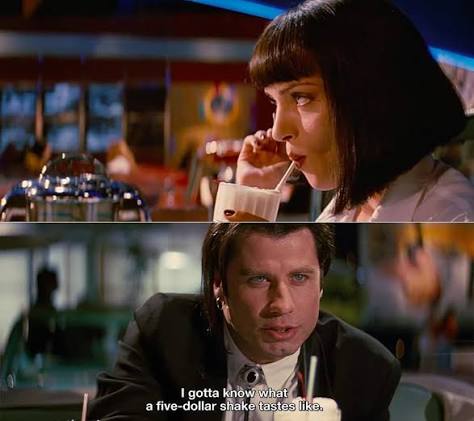
“Did you just order a five-dollar shake?”
from $5.00 in 1994 · verified to 2025

“We're not buying players. We're buying wins.”
from $1.40M in 2002 · verified to 2024
Not what a film lifestyle would cost. One object, one number, traced year by year.
“50 tola.”
50 tolas of 24-karat gold
IBJA / RBI gold price per 10 g
58.319 × price per 10 g
₹59,19,379 · +2,297%
What this is not
Neither was invented for this. A consumer price index and a purchasing-power comparison are the standard tools for asking what a number meant at the time — which is the only question a line of dialogue ever poses.
Consumer price index
A CPI tracks what a fixed basket of goods costs over time. Divide any old price by the change in that basket and you get the figure in today’s money — the number a person would actually feel.
It is what separates a price that rose from a price that got more expensive. Fifty tolas of gold went up 2,297% in rupees and 432% after inflation. A computer got 124% dearer on the shelf and 15% cheaper in real terms. Both are true, and only one of them is the story.
real = nominal ÷ (current CPI ÷ base-year CPI)
Purchasing power parity
Hold a product physically identical and let the country change around it. The price gap that remains is not really about the product. It is about wages, taxes, rent and the exchange rate, priced into one object anyone can picture.
Economists have run this on burgers for decades, half seriously. Vincent Vega does the same thing in a car in 1994 and gets a laugh. The method is identical. Only the framing changed.
local price ÷ median local wage = hours of work
Popular culture is full of dated price quotations.Nobody wrote them down as data.
A screenwriter picks a number because it sounds right in the room. That makes it a rough record of what an audience thought something cost, in a year you can date exactly. Run it through the same instruments a statistical agency uses and the joke turns into a measurement — of gold, of land, of a vegetable, of a desktop computer, of a share nobody sold.
Everything here shows its working. Each figure traces to an observation, each observation to a dataset with a publisher and a date somebody last checked it. An estimate is labelled an estimate.
Cinema exaggerates.Markets keep receipts.
Research, data modelling and interface in one artefact — popular culture put through the instruments modern economics already uses. This is the work Duku does, on a subject nobody asked us to take seriously.
Created by Duku Design Labs